Tuesday, November 26, 2024

Who Was Che Guevara? by Ellen Labrecque


 Who Was ...? biography series for middle grade brings rebellious figure of Che Guevara who was a leader of the Cuban Revolution and became a symbol of youthful rebellion.

Ernesto Guevara (1928-1967) was born in the port city of Rosario, Argentina. From young age, he craved adventure. While in school, he still traveled whenever he had a chance. While traveling, he began to write in his journal every day. 

He still had two semesters of medical school to finish when his friend asked him to join him on a trip on his motorcycle to Venezuela. On this trip, they met people of different backgrounds and saw how they lived. It left a lasting consequence on Ernesto. 

After graduating from medical school, he traveled to Bolivia, Peru, and Ecuador. 

Then, while in Guatemala, he learned about communist and how the current president of Guatemala was taking the land owned by rich people and corporations, then redistributing it to the poor. Ernesto became passionate about this idea of helping the poor. While on his travels, he met many poor people who worked hard and hardly got paid. 

In Mexico City, he began his work as a doctor. There he met lots of Cubans who began calling him Che meaning friend. Through them, he met Fidel Castro, who told him about Cuba’s situation of being controlled by a small group of wealthy people, and he wanted to overthrow the government. He asked Che for help, and they succeeded. Afterwards, Castro asked Che to help him govern Cuba. 

In 1964, Che spoke at UN in NYC criticizing the US and other countries for taking advantage of the land and the people of the poorer nations. 

After coming back to Cuba, he decided to go to Bolivia which was run by a dictator and to try to overthrow the government. On October 8, 1967, he was captured and killed the following day.

This biography embodies true nature of a man who rebelled against injustice. As a young man, he looked for adventure and found the truth and tragedy of his country. 

Source: Penguin Workshop, 2019


TRENDING INSPIRATION: Take Action When You See Injustice


Traits:

·         He craved adventure and to see what was beyond what he knew

·         He wrote his experiences in his journal every day

·         He witnessed human injustice and wanted to make a difference

·         He took action in making poor people’s lives better


“Above all, try always to be able to feel deeply any injustice committed against any person in any part of the world. It is the most beautiful quality of a revolutionary.” Che Guevara


“We were…two young men-boys, really-who went looking for adventure and found the truth and tragedy of our homeland.” – Alberto Granado (trip with Che through South America)


FURTHER INSPIRATION AND RECOMMENDATION:


 The Genius of Jesus: The Man Who Changed Everything by Erwin Raphael McManus - What is the purpose of your life? How can your life matter? There is more to life than simple existing. How do you find your purpose in life?

To better understand it, many study the works of geniuses. There are many of them in different disciplines, including science, arts, and philosophy. I always thought that the greatest of them was Leonardo da Vinci, but the author reasons it was Jesus. The one that never gets to be mentioned as genius and who left the most lasting impact. And there is a big difference between other geniuses and the one of Jesus. The others saw new ways in their fields; Jesus saw a new way to be human. His genius is reverse from the others. Not everyone is born a prodigy, but everyone has ability to transform into better.

Jesus’ genius was “how he engaged people from every walk of life, and how he dealt with controversy, conflict, and opposition.” The little interactions we experience every day matter and how we handle them.

The author interestingly illuminates different kinds of geniuses with concise examples; how we see it in modern time and how they were approached by Jesus and what a difference his methodology made. I enjoyed how he recaptures what, for example, empathy or ethics mean. My favorite was the genius of grace and how he profoundly learned that lesson that shapes his life to this day. He reminds us that in those most strenuous situations in life it might be hard to keep that grace, but those are the lives’ lessons worth noting and learning from. It’s not always easy to rise above the fray, but “grace gives us room to grow, to change, to mature.” The past doesn’t define our future.

McManus is a gifted wisdom-teller, who was an average student and an introvert. While studying genius in college and searching for his purpose in life, he ran into Jesus of Nazareth and that put him on his extraordinary journey, defying those who didn’t see him achieving much in life. He rose to achieve Doctorate degree and to be an advisor to the CEOs and others among many other achievements. He is a true testament to what he preaches about.


Tuesday, November 12, 2024

Ferdinand Magellan by Candy Gourlay


 This First Names biography series for middle grade brings one of the greatest explorers of the fifteenth century - Ferdinand Magellan who was the first man to sail around the world.

Ferdinand was born to a noble family in 1480 in Sabrosa, Portugal, among rolling hills with vineyards. When he was about eight his family moved to Porto by the sea where he admired the ships of explorers, and dreamed of being a captain and travel to mysterious places.

After losing both parents in 1490, he was sent to school for Pages in Lisbon. As a page he watched all the explorers approach the king for funds.

In 1493, when he was thirteen, Christopher Columbus received funds from Spain for his voyage across the Atlantic Ocean. Ferdinand dreamed of exciting travels, but instead he was given a clerical position.

After ten boring years, there was hope on the horizon for Ferdinand when Vasco da Gama traveled beyond the southern tip of Africa to India. King Manuel of Portugal wanted to conquer the new lands for its riches. Twenty two worships were assembled, but he didn’t have enough men. This was Ferdinand’s chance at his dream. As a noble, he couldn’t sign up as a working crew member. He had to sign up as a “gentleman adventurer,” who came for adventure, not money.

Ferdinand distinguished himself and got praised by the captain who promoted him as his assistant. After conquering the west coast of India, they pushed farther east. After conquering Malacca, at thirty-three, after eight years, he returned to Portugal.

Meanwhile, there were some new discoveries in South America, and Ferdinand saw his chance to discover something new. After securing the funds, his expedition took him west, toward southern tip of South America. Afterwards, they persisted west and arrived at Philippines. They were getting close to the Spice Islands, when Ferdinand lost his life in a battle at Mactan Island.

Even though he didn’t actually make it to the Spice Islands, he is still credited to be the first one to circumnavigate the world as his fleet finished the journey.

This biography embodies true nature of an explorer, a man who was curious about the world and craved to discover something new.

Source: Harry N. Abrams, 2020


TRENDING INSPIRATION: Be Observant and Open to New Experiences


Traits:

·         As a child, he observed ships at port which led him to dream of being a captain in order to travel to mysterious places.

·         As a page at king’s court, he watched all the explorers approach the king for funds.

·         After ten boring years at king’s court, he acted when opportunity presented and signed up for an unknown adventure with Vasco da Gama who was conquering new lands.

·         He distinguished himself quickly and got promoted as captain’s assistant.

·         After returning from his adventure, he signed up for his own expedition. He already knew how to secure funds.

·         He is credited to be the first one to circumnavigate the world.


“I am not afraid of darkness. Real death is preferable to a life without living.” – Vasco da Gama

“Travel teaches us that we have ability to adapt.” – Ferdinand Magellan


FURTHER INSPIRATION AND RECOMMENDATION:


 The 72 Names of God by Yehuda Berg – “The power of The 72 Names of God operates strictly on a soul level, not a physical one. It's about spirituality, not religiosity. Instead of being limited by the differences that divide people, the wisdom of the Names transcends humanity's age-old quarrels and belief systems to deal with one common bond that unifies all people and nations as one — the human soul.”


Tuesday, October 29, 2024

Who Was Christopher Columbus? by Bonnie Bader


 Who Was ...? biography series for middle grade brings the adventures figure of Christopher Columbus who found the New World and never knew it.

Christopher Columbus was born in 1451 in Genoa, Italy. Genoa was a busy port on the Mediterranean Sea. With his brother, he loved going to the docks and watching all the ships bringing goods from faraway places. He dreamed of becoming a famous sea captain. 

He started sailing at the age of fifteen. It took him to Lisbon where he opened a business with his brother, making maps. Based on the information gathered from captains at the docs he created maps. At the map store, he heard merchants talking about finding a new route from Europe to Indies. This became his dream.

His dream was also enforced by the stories he read about Marco Polo’s travels from Italy to China, and was fascinated by them. No one from Europe was able to sail east to Indies as the route was too long. They all came back. Thus, he wanted to sail west to Indies, but people laughed at him. So he read book after book to gather as much information as possible. 

Now, he needed the money for his dream adventure. After a few refusals, the king and queen of Spain granted him money. He was already forty-one which was considered old for such voyage. After gathering three ships, crew and supplies, they sailed on August 3, 1492. 

On October 12, 1492, they landed at Bahamas. Within the next few weeks, they explored the islands for gold, but there was very little of it. 

On January 4, 1493, they headed home. Despite the little gold he brought, he was welcomed as a hero. His next three trips turned unsuccessful in finding gold.

Columbus died on May 20, 1506 believing that he found a sea route to the Indies. He didn’t find gold; instead he found a whole new world. 

This biography embodies true nature of an explorer, a man who was curious about the world and craved to discover something new. 

Source: Penguin Workshop, 2013


TRENDING INSPIRATION: It’s Never Too Late to Follow Your Dreams.


Traits:


·         From childhood, he enjoyed being by the sea and watching ships in the busy port. This led him to his dream of becoming a famous sea captain.

·         He started sailing at the age of fifteen which brought him to another city where he stayed for some time until a better opportunity presented but meanwhile he was making maps from the information gathered from captains.

·         When he heard merchants talking about finding a new route from Europe to Indies. This became his new dream.

·         He read book after book on the subject of those who travelled far including Marco Polo.

·         He knew he had to sail in the opposite direction to the known route at the time even when others laughed at him.

·         After his research, he needed money to fund his expedition. After a few refusals, he was granted the money.

·         He was considered already old for such adventure but he persisted with his dream.

·         He didn’t find gold; instead he found a whole new world.


“Life has more imagination than we carry in our dreams.” – Christopher Columbus

“You can never cross the ocean unless you have the courage to lose sight of the shore.” – Christopher Columbus


FURTHER INSPIRATION AND RECOMMENDATION:


 Christopher Columbus didn’t limit himself because of his age. He didn’t give power to fear. He continued to explore passed his age as it was seen during his time.

Dr. Wayne Dyer explores the subject of Time in his book “Wisdom of the Ages,” where he further explains it by citing poetry of John Milton, one of the most respected figures of English literature. “Milton lost his eyesight in his early forties and had to dictate his poetry when this was a far greater hardship than it would be today.” By finding the way to continue what he loved, he triumphed over his earthly fate. Our physical world doesn’t have to limit our spiritual world. Make peace with time, don’t give it power by obsessing about it.

“Live the truth that resonates with you, regardless of how you have been conditioned or what the good opinion of others might be.”


Tuesday, October 15, 2024

Wildflower Emily: A Story About Young Emily Dickinson by Lydia Corry


 Emily Dickinson’s story is written in a very warm and fun way. It’s in a style of comic filled with vivid illustrations, short text and selected poems.


Emily was passionate about botany which she loved exploring in true nature. She did it with her big dog who was supposed to protect her.

When she listened to nature, her second passion woke up within her – poetry.

The story focuses on her early years before she became a recluse. It brings her adventurous and joyful side which truly shines through in this story.

The last pages are in a form of vignettes summarizing the years 1830-1886: how she wrote poetry, made her own books, loved baking, and about her siblings and community.

The target audience for this book is 8-12 years. For proficient readers it will be a breeze, and for those who need more encouragement it will be an enjoyable journey. With simple text and very warm illustrations, the story is presented in a fun way with character that engages and inspires to explore the nature, to be authentic, and to follow one’s heart.

Source: Godwin Books, MacMillan Publisher, 2024


TRENDING INSPIRATION: Listen to Nature


Traits:

·         She explored her passion for botany

·         She spent hours in nature to nurture her hunger for natural world

·         When she was one with nature, it woke up another passion inside her which was poetry


“I dwell in possibility.” – Emily Dickinson

“Saying nothing… sometimes says the most.” – Emily Dickinson

“I do not like the man who squanders life for fame; give me the man who living makes a name.” – Emily Dickinson


FURTHER INSPIRATION AND RECOMMENDATION:


 The Healing Code by Alexander Code – “THE HEALING CODE is your healing kit for life--to heal the issues you know about, and the ones you don't. In 2001, Dr. Alex Loyd discovered how to activate a physical function built into the body that consistently and predictably removes the source of 95% of all illness and disease so that the neuro-immune system takes over its job of healing whatever is wrong with the body. His findings were validated by tests and by the thousands of people from all over the world who have used The Healing Codes system to heal virtually any physical, emotional, or relational issue, as well as realize breakthroughs in success.

His testing also revealed that there is a "Universal Healing Code" that will heal most issues for most people. In this book you will get that Universal Healing Code, which takes only minutes to do. The book also includes:

The Seven Secrets of life, health, and prosperity
The 10-second Instant Impact technique for defusing daily stress
The Heart Issues Finder, the only test that identifies your source issues in a succinct personalized report.”

Similarly Dr. Sue Morter proves the same in her book The Energy Codes.

Dr. Joe Dispenza proved it with his own body as he healed his body when others said it was impossible. And he does it with thousands of his patients. Patients who healed themselves of cancer and other diseases.  

Tuesday, October 1, 2024

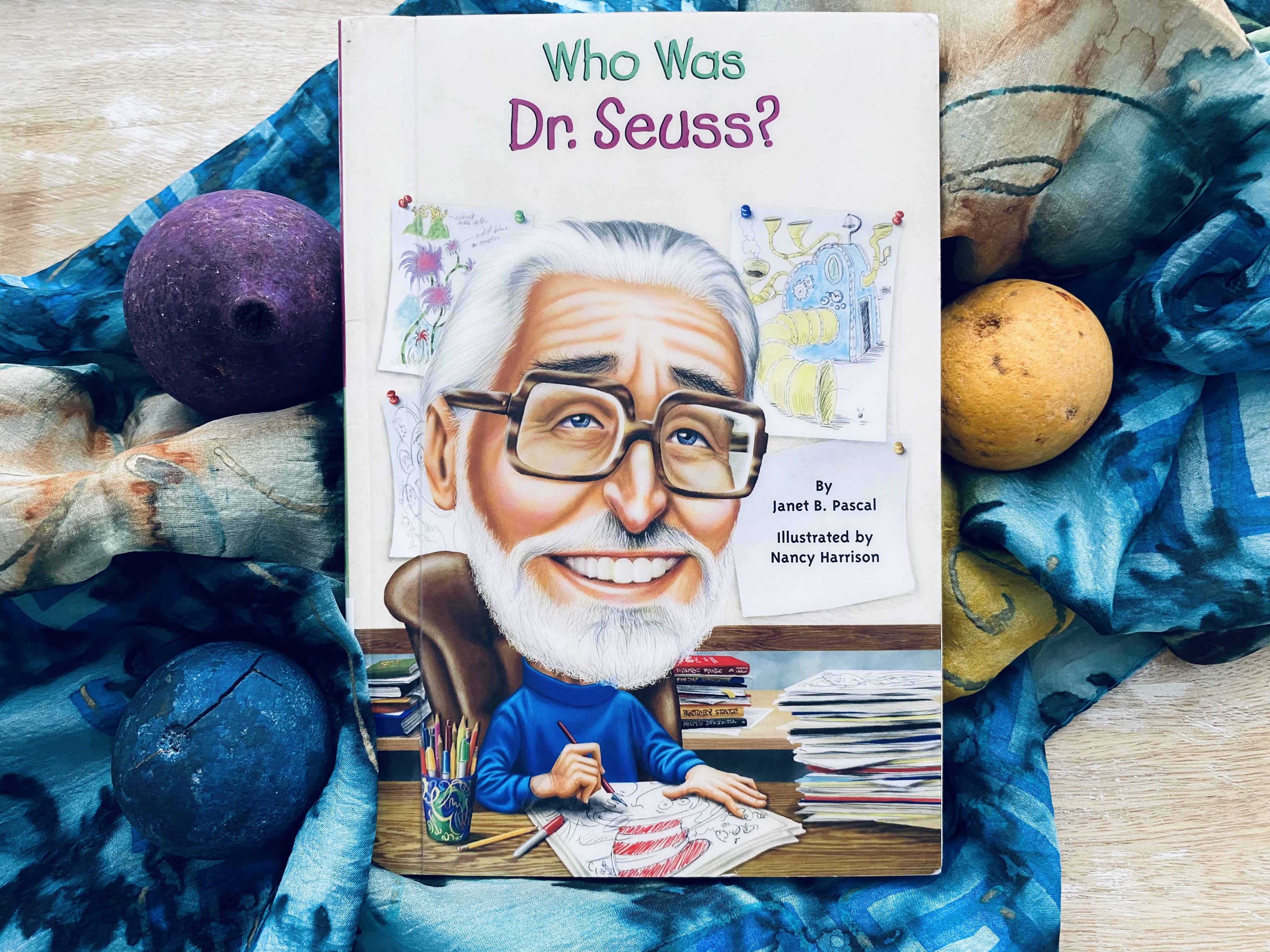
Who Was Dr. Seuss? by Janet Pascal


 Who Was ...? biography series for middle grade brings captivating figure of Dr. Seuss who became an illustrator and author and changed children’s books forever. 

Theodor Seuss Geisel was born on March 2, 1904, in Springfield, Massachusetts. He loved to hang around the zoo. He was also known for exaggerating when telling stories. He liked writing jokes for the school paper. At Dartmouth College, he became editor-in-chief as the students loved his stories and drawings. 

After college, he got a job as an illustrator. And later, started writing for Judge magazine. He introduced his strange and playful creatures. He signed the column, “Dr. Seuss.” Doctor because he didn’t get the doctorate degree and disappointed his father.

He became very successful as an illustrator. It led him to illustrating children’s books. And later to also write and illustrate stories. The Cat in the Hat was published in 1957, and became one of his most popular stories. 

With time, in his writings, he touched on subjects of environment and on not taking action when wars broke out in Europe. There was some opposition to it, but he stood up for what he believed in. He was writing for humanity. He received a Pulitzer Prize, which was never given to a children’s book writer before.

In 1990, he published his last book, Oh the Places You’ll Go, describing all the challenges and adventures facing a young person starting out on the road of life. 

He died in 1991, at the age of eighty-seven.

The story illustrates a man who never took himself too seriously, stayed true to his heart, and spoke up when he felt it was right.  

Source: Penguin Workshop, 2011


TRENDING INSPIRATION: Be Child-like (fresh and curious)


(Child-like doesn’t mean childish/immature) 


Traits:


·         From childhood, he had a natural instinct for telling stories, some of them exaggerated, some with great humor.

·         His love for stories led him to writing and illustrating, and he stayed on the path that felt right for him.

·         He became successful with writing children’s stories which later developed into writing about more serious issues which some of his followers didn’t like, but he stood by what he believed in.

·         He never took himself too seriously, stayed true to his heart, and spoke up when he felt it was right.


“Be who you are and say what you feel, because those who mind don’t matter, and those who matter don’t mind.” – Dr. Seuss


FURTHER INSPIRATION AND RECOMMENDATION:


 Dr. Wayne Dyer explores the subject of Being Childlike in his book “Wisdom of the Ages.”

Why to be childlike? Children don’t see appearances, shapes, sizes, colors, or personalities. They look with love on everything and everyone. The ageless child is always at peace, just witnessing, just observing, just allowing.

Being childlike is to be nonjudgmental, loving, accepting, and incapable of placing labels on anyone or anything.

Children are inquisitive, willing to explore without thoughts of failure or worries about criticism.

Heraclitus, the ancient thinker, said, “Man is most nearly himself when he achieves the seriousness of a child at play.”


Tuesday, September 17, 2024

Who Were the Wright Brothers? by Jim Buckley


 Who Were the Wright Brothers? biography for middle grade brings two fascinating brothers who built and flew the first successful airplane. 

The Wright brothers, Wilbur and Orville, grew up in Dayton, Ohio, in 1880s. From childhood, they enjoyed building kites and other toys. Their parents encouraged them to explore the world around them. They built a toy that looked like a helicopter. It became their dream to build something bigger and to fly it. 

Wilbur’s health problems kept him at home, but he never stopped learning. He kept reading books on history, science, nature, and religion. Orville had his own interests. When he received woodcutting tools, it led him to a business in printing. Wilbur became paper’s editor, and later joined the business. 

In 1892, they each got a bike which was a new popular thing to do. Since their friends knew that they were good at fixing things, they brought their bikes for repair. This gave brothers an idea for a new business. With time, besides repairs, they started making their own bikes. 

While they were building bicycles, there was another race to create a flying machine. Wilbur got into studying aviation. Orville read about birds. They persisted with their research. Then, they started testing their gliders over and over. If something broke, they fixed it and continued. 

The brothers were good at talking through ideas to solve a problem. Once, they got the engine up in the air, they worked on other versions to make it fly faster and farther.

At first no one took them seriously, but when reporters published stories about the Wrights’ success in the air, then people took them seriously. The US Army gave them a contract to produce planes for the US and to train new pilots. 

On May 30, 1912, Wilbur died of typhoid at the age of forty-five. His father said, “he lived a short life, full of consequences.”

After the death of his brother, Orville lost heart for leading the company. He sold it for $1 million and retired. But he never stopped making things. He worked on plumbing and heating systems. He created toys for his nieces and nephews. 

This story shines with brothers’ brilliant ideas, hard work and determination. They never got married, but made their lives very fulfilling.

Source: Penguin Workshop, 2014


TRENDING INSPIRATION: Never Stop Learning


Traits:


·         From childhood, they were eager to explore the world around them. They were very curious children and their curiosity was strongly encouraged by the parents.

·         The brothers shared their interest as well as developed their own, and supported each other.

·         They were good at fixing bikes and that gave them an idea for their own business.

·         Whatever sparked their interest, they studied about it to gain knowledge on their own.

·         They were good at talking through ideas to solve a problem.

·         At first, no one took them seriously but that didn’t discourage them from their endeavor.

·         They never stopped being curious or creative.

·         Their hard work and determination led them to success that benefited humanity.  


“Successful people are successful for one simple reason: They see failure differently.” – Seth Godin

"If we worked on the assumption that what is accepted as true really is true, then there would be little hope for advance." - Orville Wright


FURTHER INSPIRATION AND RECOMMENDATION:


 The Power of Intention by Wayne Dyer – “Intention is generally viewed as a pit-bull kind of determination propelling one to succeed at all costs by never giving up on an inner picture. In this view, an attitude that combines hard work with an indefatigable drive toward excellence is the way to succeed. However, intention is viewed very differently in this book. Dr. Wayne W. Dyer has researched intention as a force in the universe that allows the act of creation to take place. This book explores intention—not as something you do—but as an energy you’re a part of. We’re all intended here through the invisible power of intention. This is the first book to look at intention as a field of energy that you can access to begin co-creating your life with the power of intention.
 
Part I deals with the principles of intention, offering true stories and examples on ways to make the connection. Dr. Dyer identifies the attributes of the all-creating universal mind of intention as creative, kind, loving, beautiful, expanding, endlessly abundant, and receptive, explaining the importance of emulating this source of creativity. In Part II, Dr. Dyer offers an intention guide with specific ways to apply the co-creating principles in daily life. Part III is an exhilarating description of Dr. Dyer’s vision of a world in harmony with the universal mind of intention.
”


Who Was Benedict Arnold? by James Buckley Jr

  Who Was Benedict Arnold? – He was an early hero of the American Revolution and later one of the most infamous traitors in the US history. ...